

Anne Brigman’s radical nudes
The pioneering photographer who made the female body a force of nature and a symbol of freedom

Anne Wardrope Nott was born in Hawaii to missionary parents on December 3, 1869. She grew up embracing nature. She moved with her family to the Santa Cruz Mountains in California as a teenager in 1885. Annie, as she was known, picked up a camera and started to record her world, realizing that negatives could capture much more than what moved through the lens. She saw art all around her and started to position herself to best capture what she was experiencing. Life was to explore the earth.
She married a much older sailing captain, Martin Brigman, in 1894 and moved to Oakland, California. She spent many months traveling with him across the Pacific. During one trip, she fell into a hold. Seriously injured, she had to have her left breast removed, resulting in a large, dramatic scar. Despite this, she continued to enjoy life and celebrate the human form with nude self-portraits and images of friends and family.
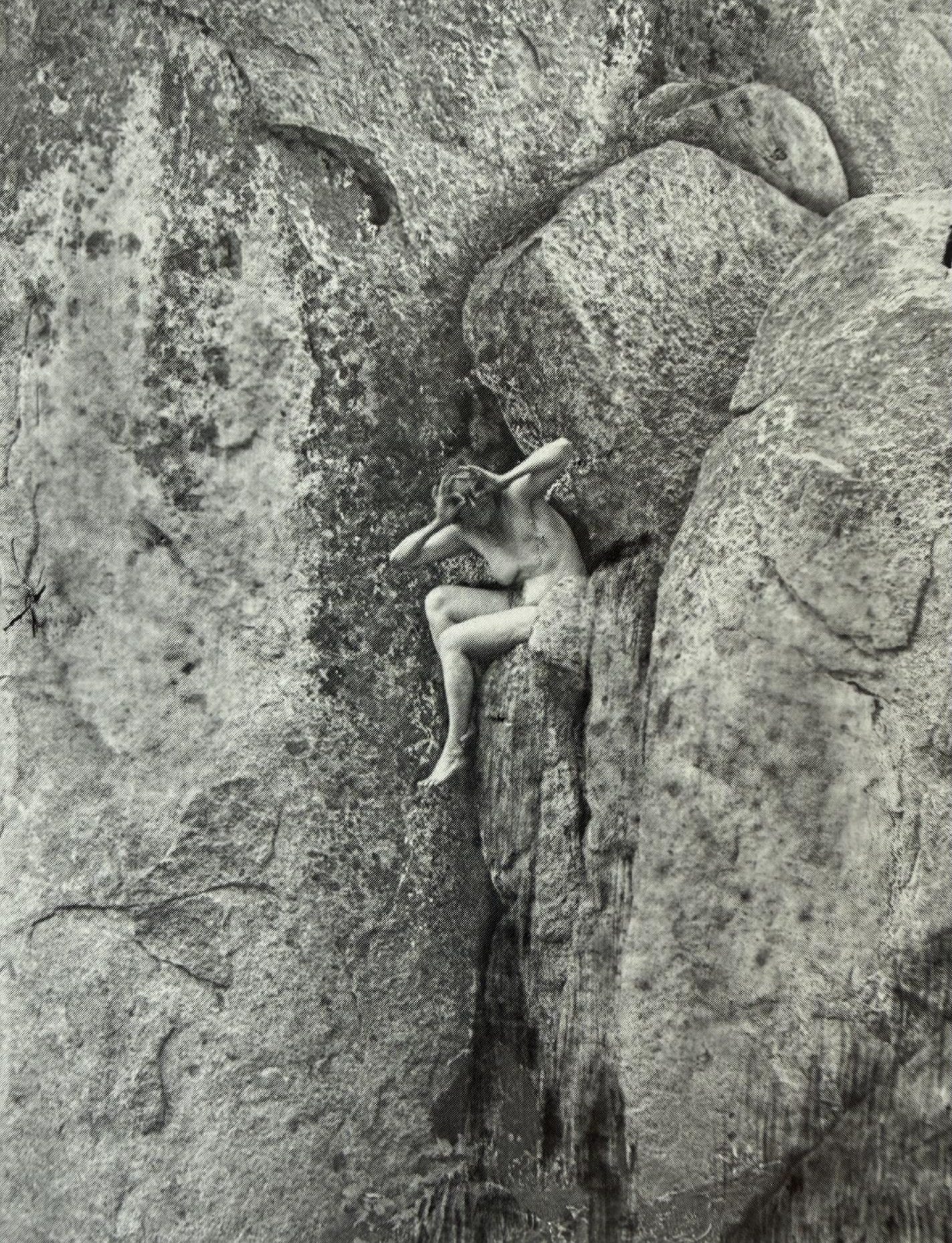
In Oakland, circa 1904, she was involved with the Hillside Club. Members abstained from alcohol and stimulants and were vegetarians. The group also worked to make their homes fit into the surrounding natural environment. Many had outdoor sleeping areas, including at Brigman’s home. Being in nature was their focus.
In 1906, she documented the damage from the great San Francisco earthquake. After months of the stresses of restoration and rebuilding, she decided to go off to the Sierra Nevada and reconnect with the more anticipated aspects of nature.
“I wanted to go and be free…That was all I wanted.”
Ann M. Wolfe wrote in her 2018 biography and summary for a photographic exhibition on Brigman at the Nevada Museum of Art:
Brigman immersed herself in the progressive intellectual conversations of her day, and was especially drawn to the writings of English socialist poet Edward Carpenter, whose philosophies of free love, natural living, nudism, and socialist thought she admired. One wonders if she modeled her simple dwelling in Oakland on that of Carpenter’s in England, which was considered a pilgrimage destination for thinkers and artists challenging the customs of Victorian society in the 1890s.
Edward Carpenter is considered the first nudist of the United Kingdom. He passionately followed and befriended Walt Whitman. He was acknowledged as an honorary member of the Fellowship of the Naked Trust in India, the first documented nudist group in the world, in 1890. In 1906, while camping in the Sierra Nevada, Brigman carried two books: Whitman’s Leaves of Grass and Carpenter’s Towards Democracy.
She was driven by the language and images created in the words of Whitman and Carpenter. Their messages about the connection of the body to nature resonated as she looked to the mountains. She studied, commented on, and recommended Carpenter’s 1883 Towards Democracy. Carpenter presented the female figure as a temple and the place of unity and fusion to create life. His message may have been meant for a man and woman, but it could just as easily have been interpreted as between woman or man and nature. She saw herself as a pagan, seeking the spirits linking the earth with people.
She fell in love with old juniper, cedar, and bristlecone pine trees as they struggled to survive in the granite of the high mountains. She had enthusiastic friends and family members who trekked with her and exuberantly posed naked in extreme settings, including high in trees and in cold water under a melting ice field.
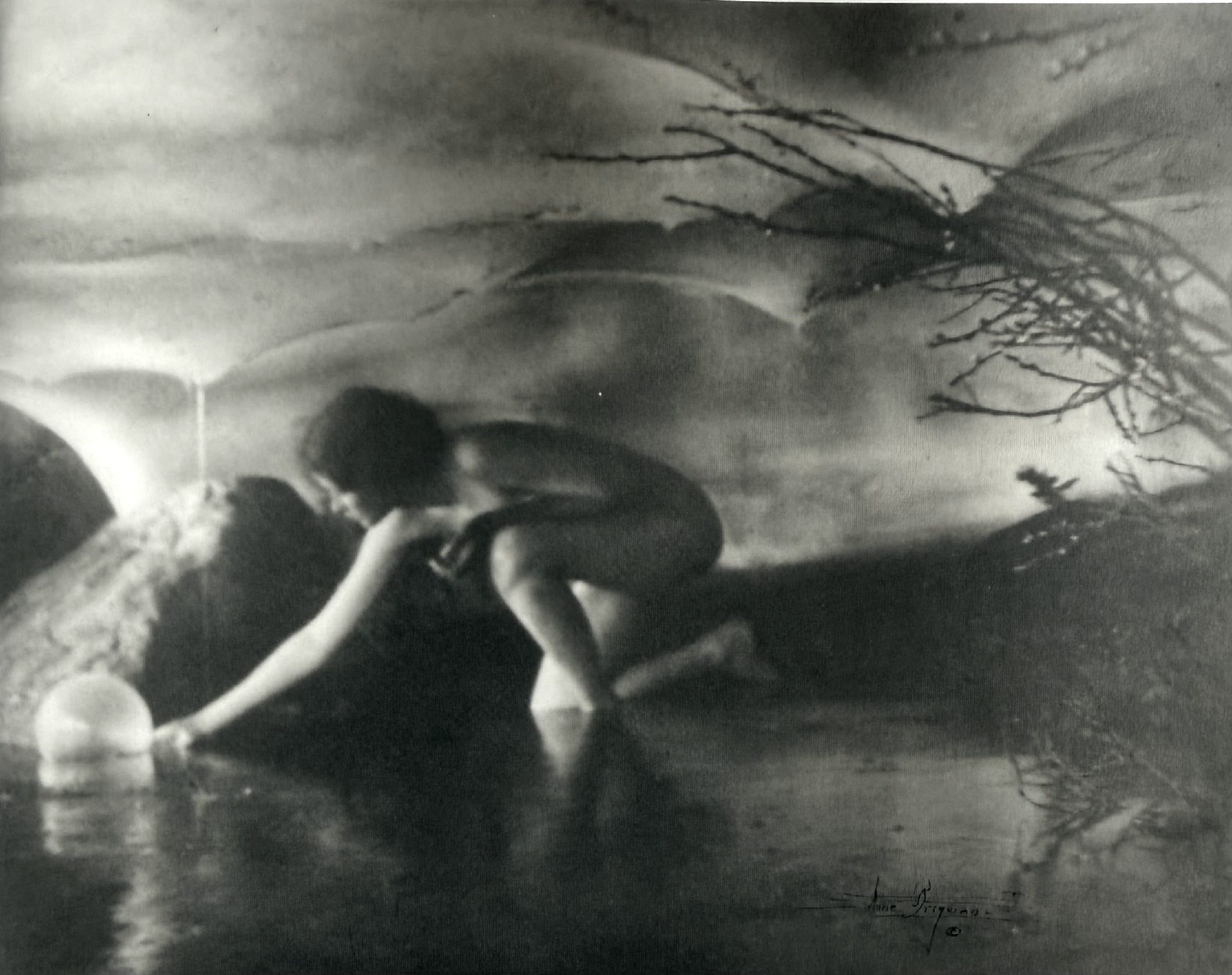
In her own words:
In all my years of work with the lens (since 1906) I’ve dreamed of and loved the work with the human figure – to embody it in rocks and trees, to make it part of the elements, not apart from them, even as Edward Carpenter writes:
How the human bathed in the sheen
and wet, steeped in sun and air,
Moving near and nude among the elements,
Matches somehow and interprets the whole of nature,
How from shoulder to foot of mountain and man
alike the lines of grace run on;
How, as the Greeks dreamed, in rock and rill
divinest human forms lie shrined, or in the wild
woods lurk embosomed.Rare humans, rare in their minds as well as in their slim, fine bodies, have given me of their simple beauty and freedom, that I might weave them into the sagas of these wind sweep trees on high peaks.
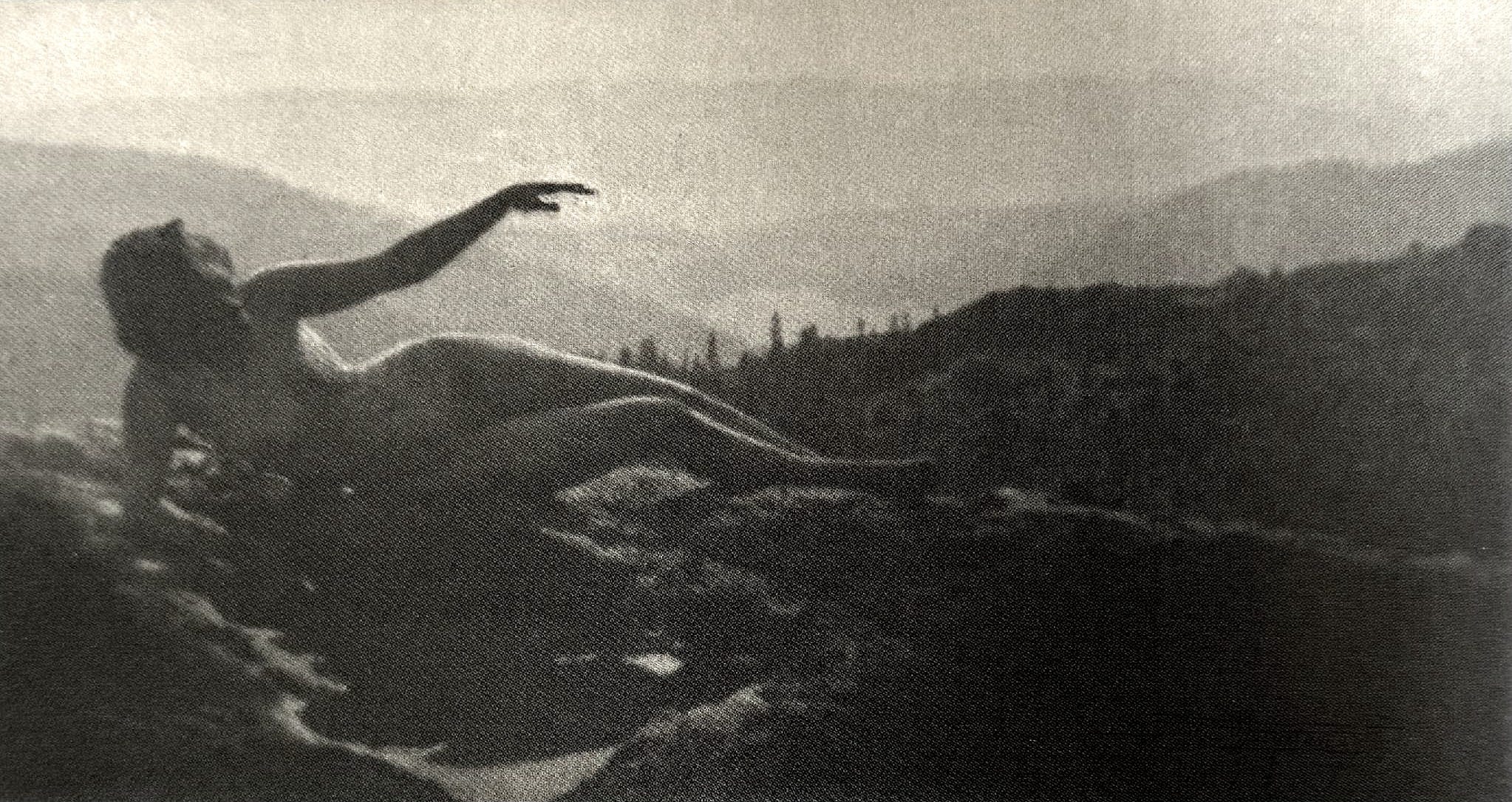
In 1909, she took a nude self-portrait above Donner Lake at dawn. It was a woman’s view of the Sierra Nevada. It was not the image of a person conquering the heights or championing the beasts, as so many men had attempted to capture. It was of a beautiful nude woman raising her arm like a ballerina, embracing the mountain morning light from a high vantage point and welcoming the day. It was a woman awakening as part of nature.
At the turn of the century in New York City, Alfred Stieglitz was the champion for shifting the world’s view of photography from merely a copy of nature to a medium for fine art. His Photo-Secession group was made up of his hand-selected compatriots, who were pushing the limits of what a negative could record and the printing process could produce. It was not just an image, but feelings, emotions, and life abstracted onto paper. It was art. Brigman was invited to join this very select group and was the only photographer from west of the Mississippi to do so.
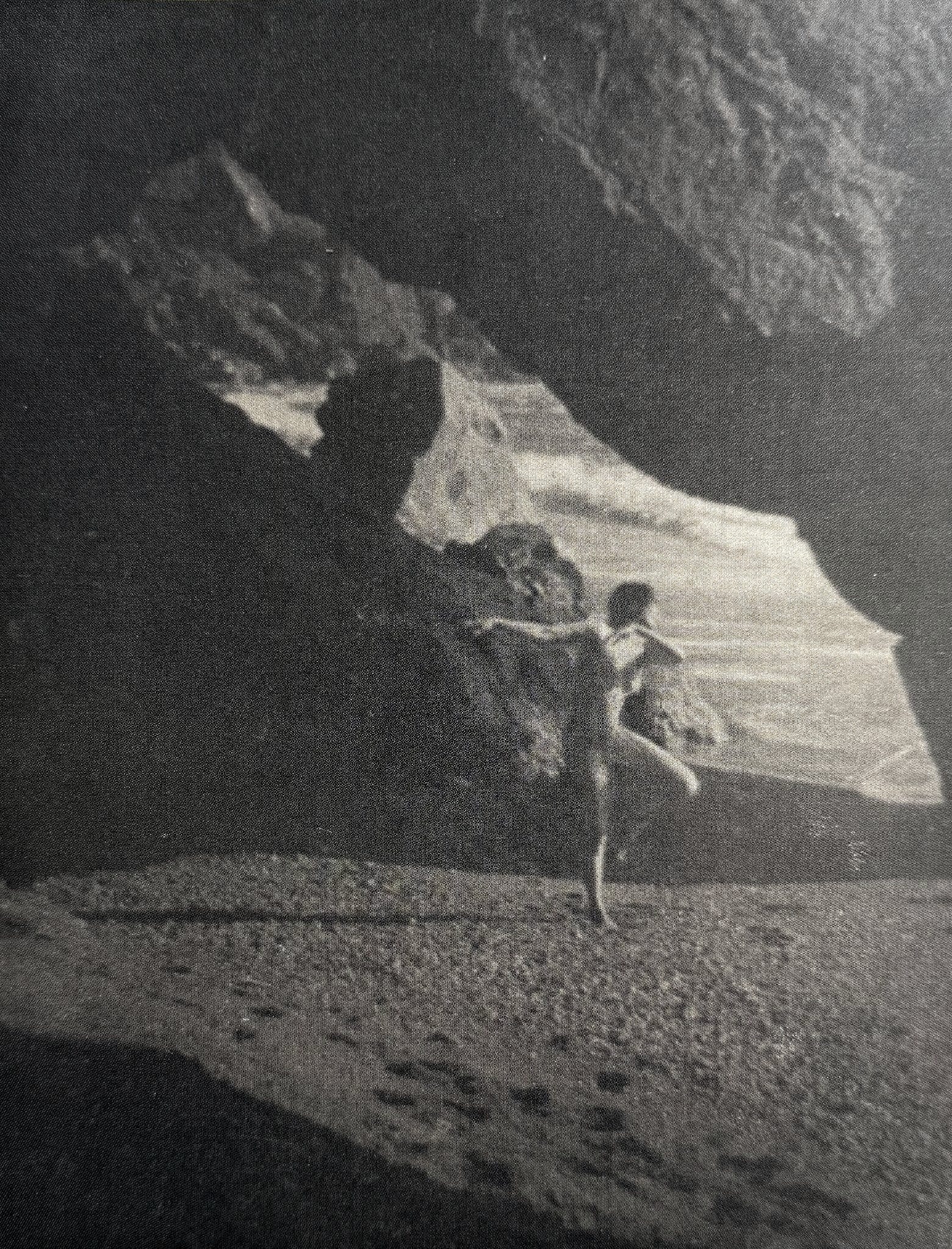
Brigman photographed the Denishawn dancers Ruth St. Denis and Ted Shawn, along with Isadora Duncan. Shawn wrote in his autobiography, One Thousand and One Night Stands, that he was an early nudist. Duncan, who was from San Francisco, was world-renowned for her free-body style of movement. Brigman incorporated aspects of dance movement into her photos, with Dawn and Ballet de Mer being examples.
In 1910, Brigman traveled to New York to meet with Stieglitz. She spent ten months on the East Coast and found life there challenging. She returned to Oakland and began going by Anne Brigman, dropping “Annie” and the “W.” She separated from her husband. She never divorced, but recognized that they thought and believed in very different things, so she decided that she would be free and independent. To do so did not require a legal process, only the personal act of doing her own thing. Now she could have the freedom to pursue her art.
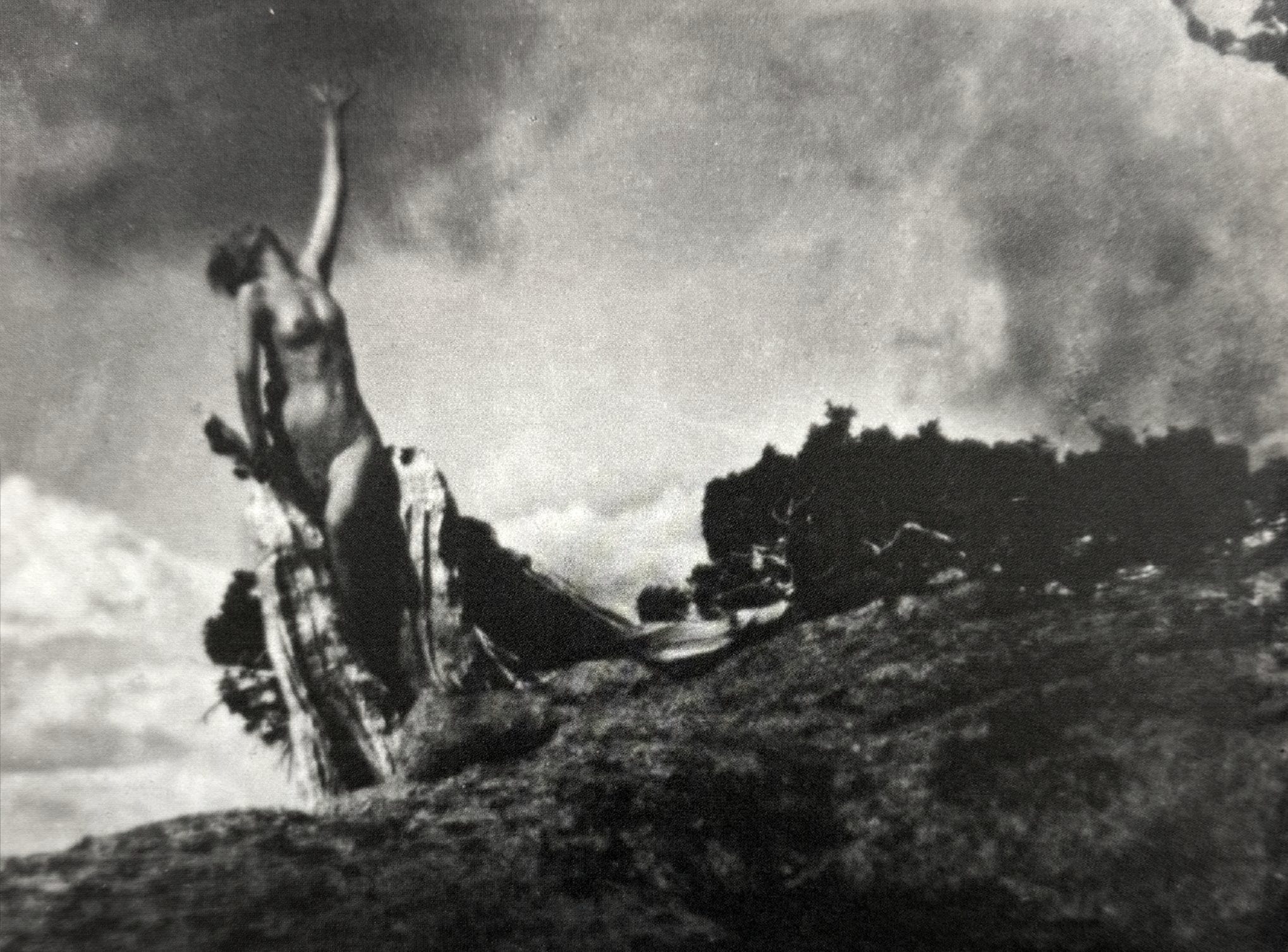
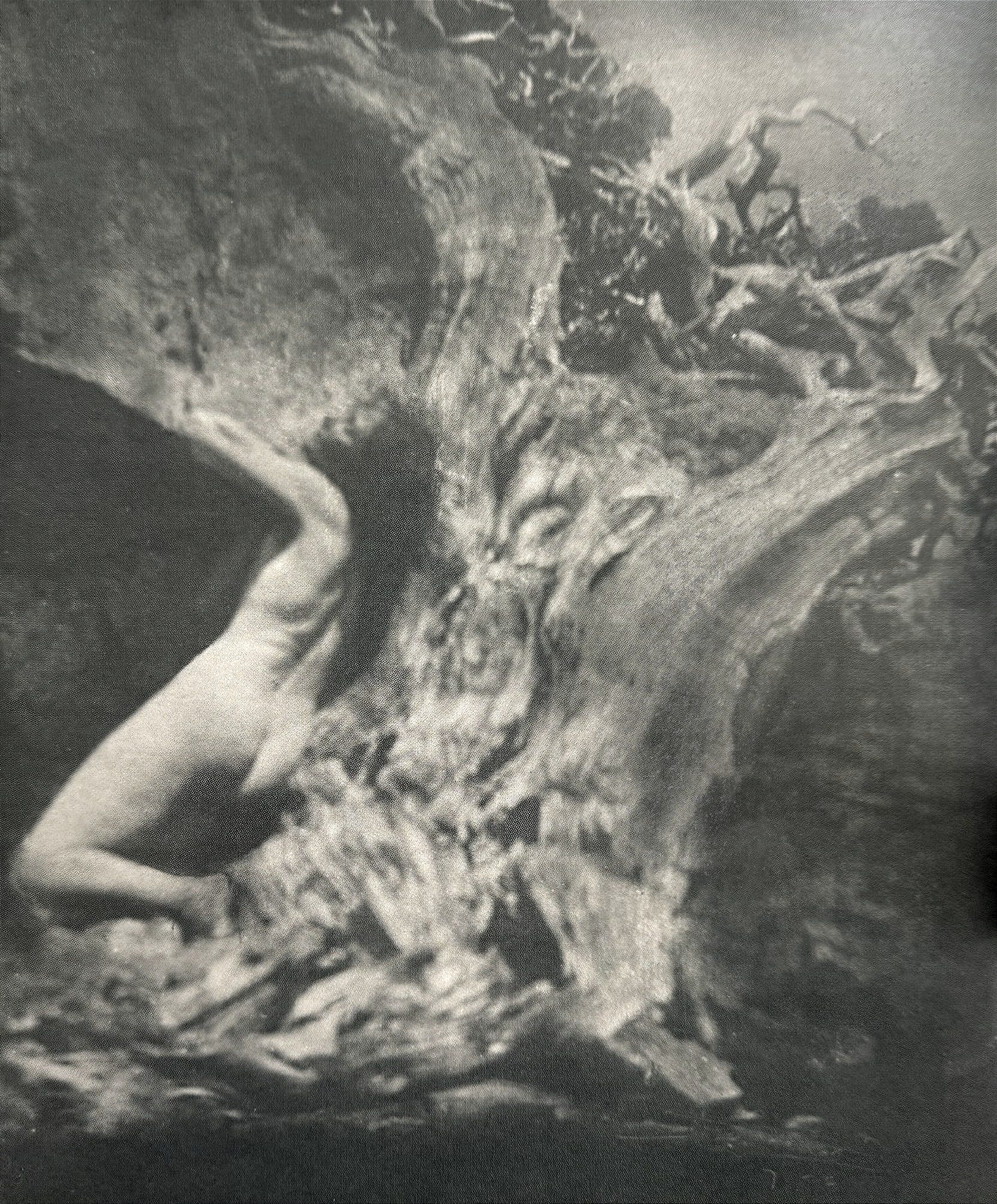
In 1911, she produced Soul of the Blasted Pine and commented that it represented “the passionate struggle of the evolving consciousness – the fight for clean, strong freedom of the body and soul – which are one.” In it, an energized body emerges anew, like a great spirit rising from the torn stump of a tree. It appears fitting for Brigman after the torments of working in New York City and deciding to be independent of her husband. It is also fitting, as Brigman had worked with the suffragettes, and in October 1911, California women won the right to vote.
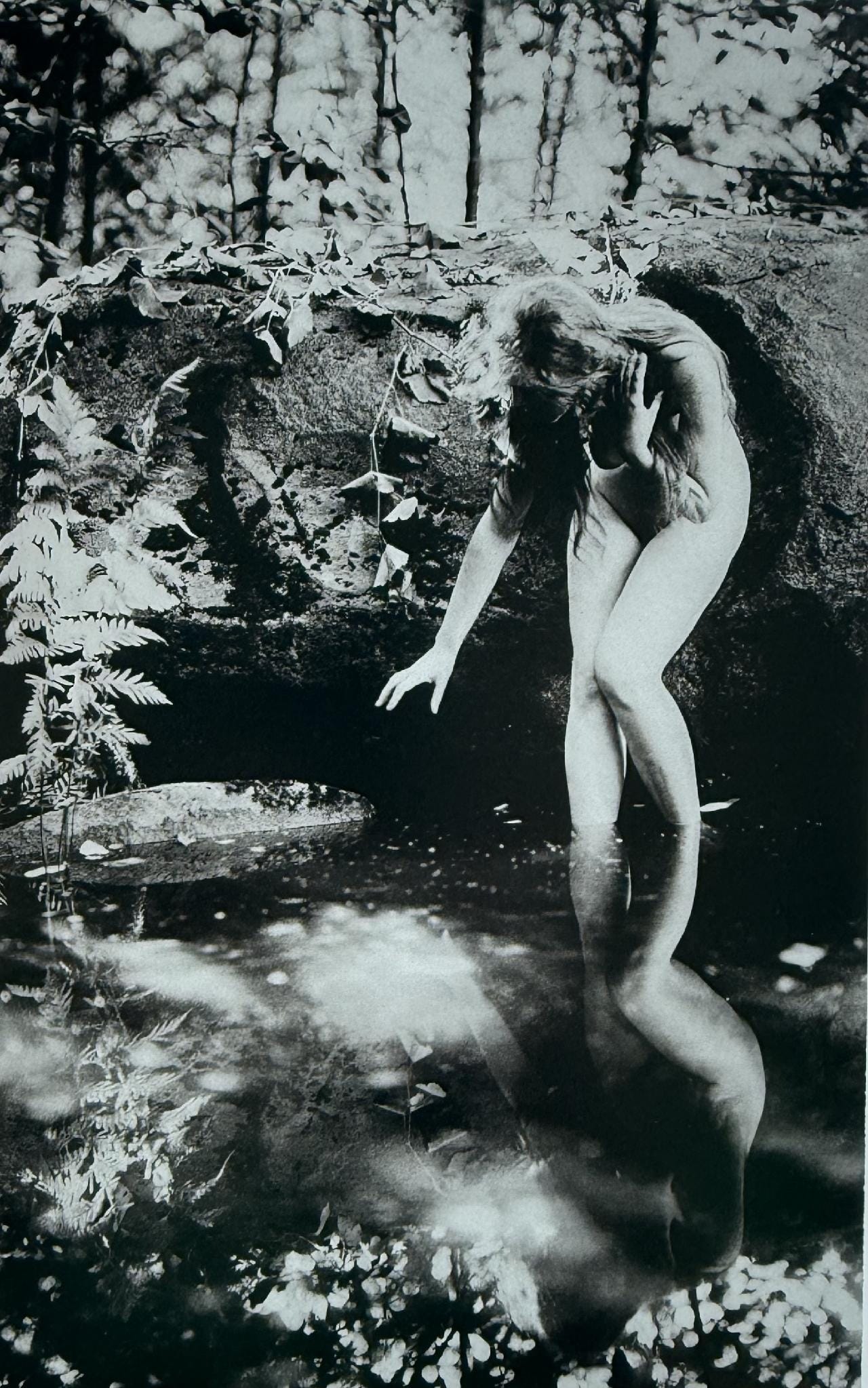
In 1914, Brigman experimented with miniatures. She produced Susannah of the Sun Bath as a takeoff on images of Susanna and the Elders, based on the story from the Book of Daniel in the Bible. The term “sun bath” was associated with nudist and physical-culture activities of the time.
In 1915, Stieglitz wrote to Brigman that he greatly enjoyed the midnight nude swims she had encouraged him to take and that being so connected to nature had given him a new attitude after a period of challenges in his art and life. Stieglitz later wrote to Georgia O’Keeffe: “The night air was intoxicating as it touched the flesh of the body – and the Water! And the swim into the Darkness! Words are inexpressive!”
On October 30, 1916, Stieglitz wrote from New York to Georgia O’Keeffe about how very fond he was of Brigman and how she captured the big things of life. O’Keeffe wrote back on December 10, 1916 from Canyon, Texas. She appreciated the Brigman photos he had sent her. She felt that viewing Canyon, where she was living, was better after having recently seen and appreciated Brigman’s photography. O’Keeffe felt the photos improved her insight into what she saw. They were “absurd” in how much they excited O’Keeffe and “almost took me through the roof.” It is reported that Stieglitz used Brigman’s photos of gnarled trees to pose the young model and aspiring artist O’Keeffe in 1918.
By 1920, Stieglitz wanted Brigman to take on the sexuality and sensuality of the modern woman. That image was not where she was coming from and not where she wanted to go. She wanted to express freedom. Women had been hobbled by fear, but the new century was offering them freedom from domestic patterns. Freedom to voice their opinions by voting. Freedom of activity through dress reform and discarding heavy, long garments. Freedom to express themselves through their bodies in nature, be it hiking in the mountains or sunbathing on granite riverbeds. Freedom to pursue the art of photography and produce images that were reflective of this new century and their new capacities for expression. She saw it as much more than images merely projecting sensuality.
Brigman very much liked Elbert Hubbard’s Arts and Crafts Roycroft programs in East Aurora, New York. Bernard Maybeck, using Arts and Crafts concepts, was planning homes in Oakland that would use local wood and materials and were designed to blend into the landscape of the San Francisco hills. She was also a friend of the world-renowned San Francisco Bay Area author Jack London, who focused much of his writing on the human-nature interface and the discovery of the inner self.
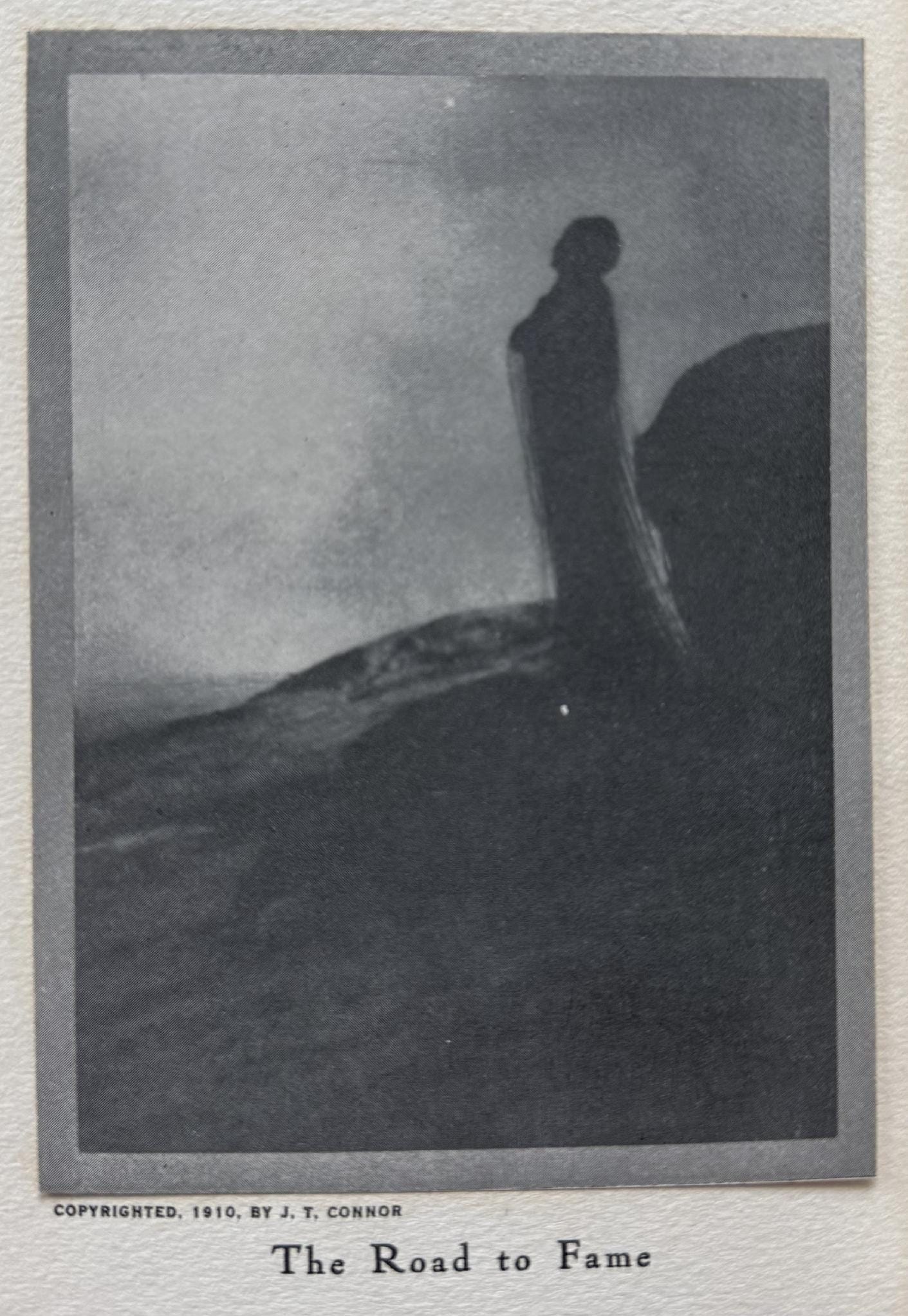
Brigman and London were close with poet George Sterling, who was a leader of the Carmel Bunch – mostly Oakland bohemians who were skinny-dipping and nude sunbathing in and around Monterey Bay by 1903. Brigman had been photographing the local rugged coast and craggy shores for years; Ballet de Mer, 1908, is one example. The Carmel Bunch produced A Book of Verse in 1910, and its frontispiece is a photo by “Annie W. Brigman,” The Road to Fame, which she had taken while in Maine during her studies with Stieglitz. This may be her last photo published under her youthful name. The book contains poems by Ina Coolbrith, Charles Keeler, Jack London, and George Sterling, all active members of the Carmel Bunch. By 1914, when news of the Carmel-by-the-Sea murder of Helena Wood Smith by photographer George Kodani hit the press, it was reported that “Brigman was a well-known personality” in that artist colony.
In 1920, Dudley Murphy made the movie Soul of the Cypress. His inspiration was Brigman’s photographs of female spirits within wind-shaped trees. It was filmed at Point Lobos, just a short distance from Carmel on Monterey Bay, where there are many wind-tossed cypress trees.
In 1920, there was a gathering of local photographers, Group f.64, at Dorothea Lange’s studio in Oakland. A picture was taken of the group clowning around, with Brigman in the center as Anne of the Crooked Halo and the others attending her as if in worship. In the photo, one person is listed as an “unidentified man.” Although the photo’s source has been searched and the list of attendees sought, this man’s identity is currently unknown.
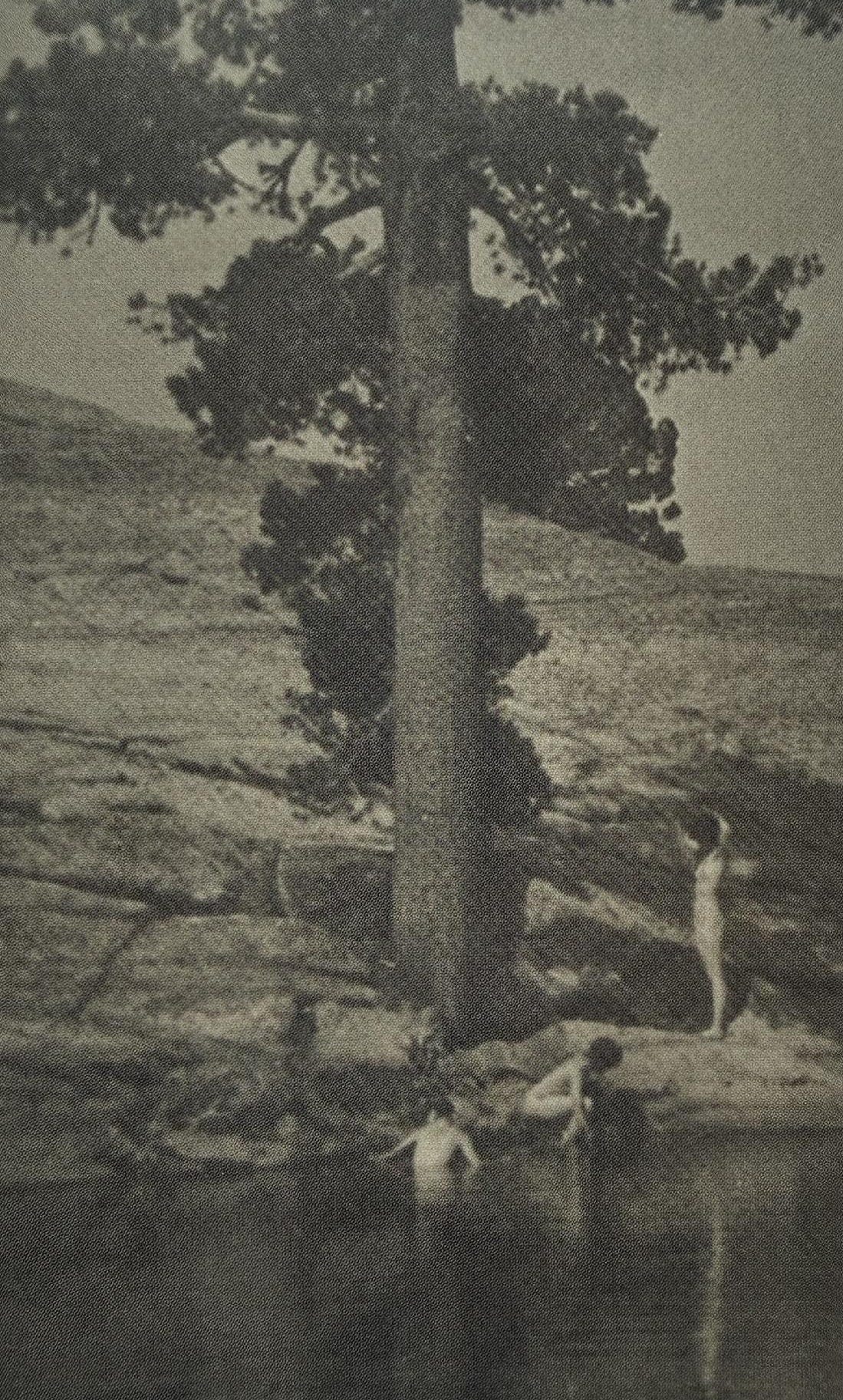
In comparison with other known photos of another Oakland photographer who was doing well professionally in 1920, this unidentified man looks as if he may have been Albert Arthur Allen, who took photos not unlike Brigman’s (Allen, The Silver Pool, 1917). He was a pioneering nudist and central to the formation of the Elysium Foundation of California in 1935 and its planning of nudist resorts throughout the state, as well as its purchase of land in 1936 that continues today as Lupin Lodge Naturist Resort. Brigman and Allen were among the contributors in a 1921 photography exhibit, the Oakland Salon, for which Allen was an officer of the organizing body, and so they were peers.
Louise Dahl-Wolfe met Brigman in 1921 and was inspired by her nudes in nature. She gathered a group of friends to “do Anne Brigmans” in open spaces, capturing the female form in the wild. Dahl-Wolfe went on to become a major figure in fashion photography who stated that she hated “arty nudes in daisy fields.” It was critical to her that the photographic images express, like Brigman’s, the power and freedom of a woman within nature, not just a smiling pinup among flowers.
Ann M. Wolfe wrote in the Nevada Museum of Art’s 2018 biography:
For Brigman to objectify her own nude body as the subject of her photographs in the early 1900s was radical. To do so outdoors in a place perceived as an unoccupied and near desolate wilderness was revolutionary. No longer restricted by social norms or relegated to the role of model in the artist’s studio, Brigman and the female artists who followed her, sought freedom by claiming their bodies and the landscape as their own. By the second half of the century, many women artists had discovered that the act of making nude photographs of themselves and other women outdoors forced new and challenging dialogues surrounding definitions of beauty, femineity, vulnerability, ritual, identity, body politics, and environmentalism.
Brigman was the first in this long line of female photographers to see women as powerful and potent forces of nature. She recorded the nude human form not only for its intrinsic beauty, but for how it expressed and melded with the life of the earth.
In 1922, Brigman became a member of the Theosophists at the Oakland Lodge. Charles Keeler of Oakland stated that the Theosophists were to “commit themselves to a life-long endeavor to … healthful and beautiful bodies … of love, truth, and beauty, as the true worship of God.” These ideas fit with Brigman’s pagan beliefs, which she had gained from Edward Carpenter’s writings, such as his A Study of Human Evolution and Transfiguration.
In 1929, she moved from Oakland to Long Beach to be with her mother and sister. She photographed the shore, tidal patterns in the sand, and ocean light. Later in life, Brigman made linoleum block prints and wrote poetry. The following is reflective of her love of nature and the oneness she experienced.
Pagan Chant
The swift swim in the icy, mountain pool
And then the granite rock’s warm bosom
Where we dried our honest nakedness
In glowing sheaths of air
And the white radiance of the high-noon summer sun…
Careless of time or custom…unafraid…
Far from the carp of busybody tongues.
Tryst with the Wind
Soft, cool wind from the desert peak…
Fragrance of sage and musk…
Shrill of a nighthawk’s sharp-winged flight
And a great white star in the dusk.
Around my feet, small, dry leave whirl
In a dusty dance with the whispering trees…
And it’s glad I am of the wind in my hair,
And glad of its kiss on my breast and face
And its lift and swirl as I stand here bare
For my tryst with the wind
In the night
With a star.
I would like to thank Charles Ingham for introducing me to Anne Brigman and encouraging me to investigate her naturist ideals. Little did I know at the time of her various links to other early naturists. 🪐
Sources via the Western Nudist Research Library:
-
Anne Brigman (1949) Songs of a Pagan, Reprinted Nevada Museum of Art (2018)
-
Daile Kaplan (2001), Albert Arthur Allen: Premiere Nudes, Santa Fe, NM: Twin Palms Publishers
-
Jack London et al. (1910), A Book of Verse, P. C.: A. C.
-
Oakland Museum (1974), Anne Brigman – Pictorial Photographer/Pagan/Member of the Photo-Secession
-
Kathleen Pyne (2020), Anne Brigman – The Photographer of Enchantment, Yale University Press
-
Ann M. Wolfe (2018), Anne Brigman – A Visionary in Modern Photography, Nevada Museum of Art