

Cec Cinder, father of the free beach movement, dies at 98
His words, books, and battles helped shape the modern nudist cause
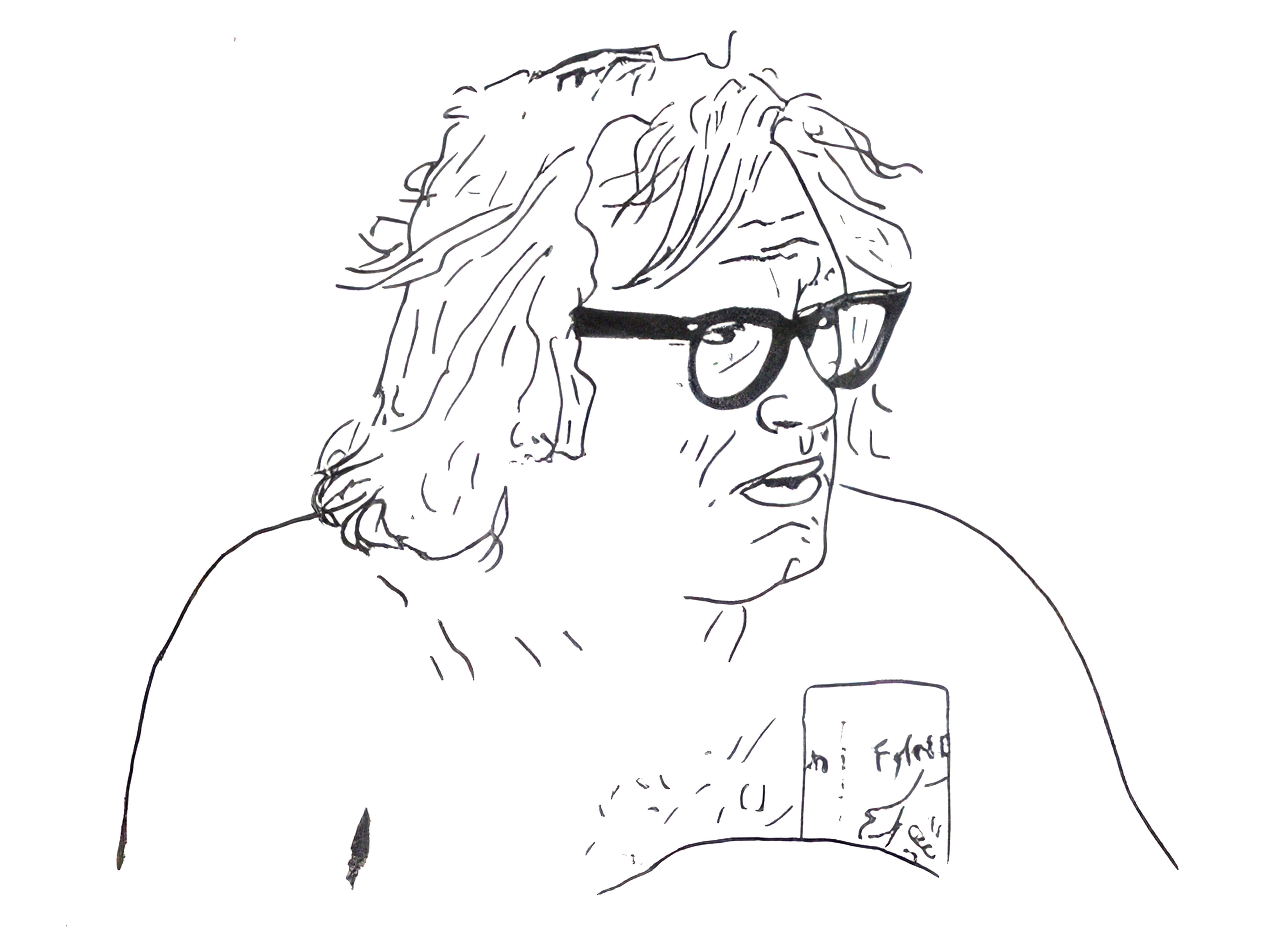
Cec Cinder, a defining figure in the American nudist movement, died peacefully on May 12, 2025, in Riverside, California. He was 98 years old. He had struggled with dementia during his last decade, but had lived a long and fruitful life. A prolific writer and documentarian of nudist history, Cinder authored The Nudist Idea, a sweeping philosophical and historical study that remains one of the most influential texts ever published on the subject. He was known for his unflinching intellect, radical politics, and uncompromising belief in the liberating power of the human body.
Born in 1927 in a small Pennsylvania town, Cinder was raised in a deeply devout Christian household. By the age of twelve, he had begun to reject religion altogether, later describing himself as a “militant atheist.” Even then, he gravitated toward subversive literature, speculative fiction, and ancient history—obsessions that would follow him for life. After graduating high school in 1945, he enlisted in the U.S. Army and was stationed in postwar Germany, where he learned German and earned the rank of sergeant.
After returning home, he married his high school sweetheart and went on to pursue higher education through the G.I. Bill, eventually earning a Ph.D. in English Literature. In 1956, he relocated to California, where he taught college courses and raised a family. Cinder and his wife were both nature and animal lovers. They rescued and cared for countless pets during their lifetime, instilling the same values in their children. They cultivated a garden, citrus trees, and an extensive library. Education, good health, recreation, and sunshine were central to their lives. Cinder was a passionate reader, writer, and historian who had traveled within much of the United States, Europe, India, and Singapore.
A nudist for the books
A nudist since 1954, Cinder made his name as a prolific editorial voice in the nudist press, serving as associate editor for publications like Utopia, Arcadia, Sol, and Nudistory throughout the 1960s. He often used these platforms to establish himself as a sharp cultural critic who challenged both puritanism and the complacency of the nudist mainstream.
“It’s like breaking the sound barrier—we’re through now. Nobody’s going to kick sand in our face any more with impunity. Naked power has arrived!”
—Cec Cinder, Green Mountain Quarterly, 1976
For Cinder, nudism was never just about recreation—it was a confrontation with society’s deepest hypocrisies. He saw nudity as a deeply political act, capable of upending systems of power and control. Nudism, to Cinder, was a praxis: a lived philosophy grounded in human dignity, self-ownership, and the rejection of authoritarian norms.
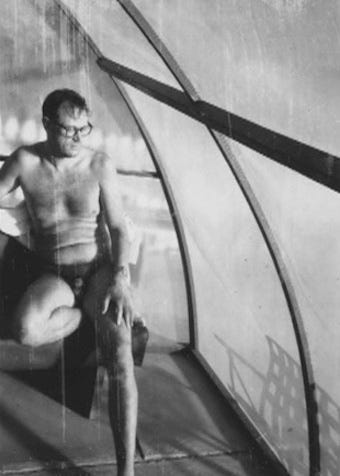
He often critiqued the mainstreaming of nudism and warned against reducing it to mere recreation, insisting instead that nudity be understood as a revolutionary act: a way to question conformity, resist repression, and build solidarity through shared vulnerability.
He held a Ph.D., but he preferred underground presses to academic journals. His publishing imprint, The Ultraviolet Press, became a platform for his own fiercely independent essays and historical research, including his landmark work, The Nudist Idea, which traced the philosophical roots of nudism from early 20th-century German reformers like Richard Ungewitter to the American free beach movement of the 1970s. The book remains one of the most ambitious intellectual projects in American nudist literature, widely considered a definitive treatment of the movement’s ideological currents and contradictions.
As part of that same intellectual project, Cinder personally translated Ungewitter’s foundational 1906 text Nacktheit into English for the first time. Published through Ultraviolet Press under the title Nakedness, the translation offered English-speaking readers direct access to the original moral and hygienic philosophies that helped launch the German Freikörperkultur movement.
Free beaches and nude documentation
“The more research I did, the more I got interested in the movement… I didn’t even think I was aware of it at the time, but there had never been a compilation of all these articles in the nudist press.”
—Cec Cinder on writing The Nudist Idea, oral history interview, 2013
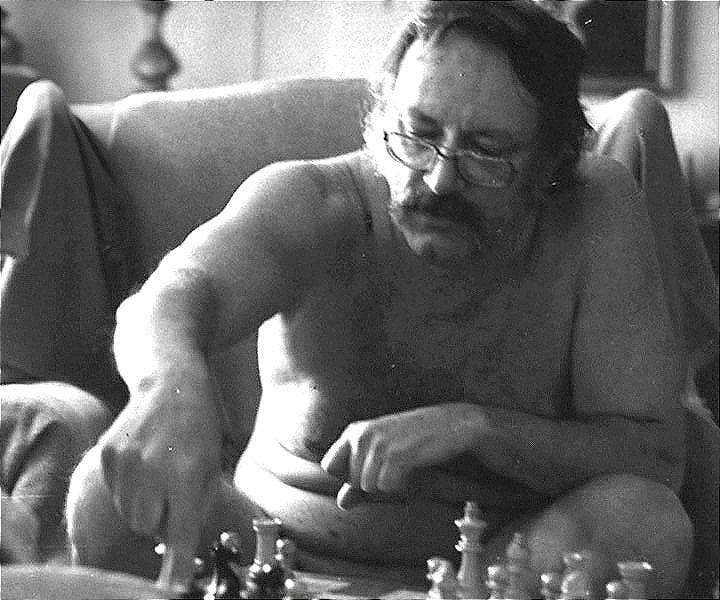
While he catalogued and documented the wider nudist movement, it was the free beach movement that Cinder’s name became synonymous with. He was there in its earliest days, chairing California’s first Free Beaches Committee and later helping organize mass nude rallies—like the 1976 Zuma Beach protest that drew more than a thousand participants and a swarm of police. He co-founded Beachfront U.S.A. and served as its president, secretary, legal chair, and unofficial historian. He edited Beachhead and Free Beach News, ran legal campaigns against city nudity ordinances, and wrote hundreds of articles and editorials advocating for body freedom and civil liberties.
He helped turn the ASA Bulletin into a full-fledged newspaper, served as vice president of the Western Sunbathing Association (now known as AANR West) for a decade, and founded the Callen-Davis Memorial Fund, which raised tens of thousands of dollars to support free beach legal efforts. He was a dedicated member of the Olive Dell Ranch, and he lived not far from the property in Riverside for many years.
He was also a founding member of the Western Nudist Research Library in 2006, and in 2022, his personal archive—a vast library of nudist books, magazines, photographs, legal documents, and correspondence—was formally donated to WNRL. The collection, known as AINS (the Archive of the Institute for Nudist Studies), includes rare materials such as early scrapbooks, legal files, and personal letters with figures like Jefferson Poland. The Naturist Education Foundation funded the shelving that now houses his collection at WNRL.
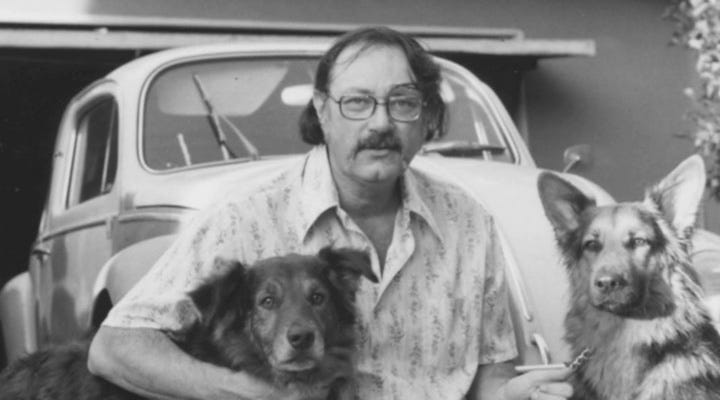
Staunchly nonconformist
Despite his prolific output, Cec was often an iconoclast within the nudist movement—a principled agitator who often found himself at odds with more mainstream nudist organizations. He was unafraid to call out what he saw as hypocrisy or moral cowardice, and some of his sharpest writing was aimed not at outsiders, but at nudists who had traded radical ideals for social acceptability. He did not believe in hiding from controversy. He believed in confronting it.
With that said, especially in his retirement, he was also widely celebrated for his personal service to those very same organizations that he was unafraid to criticize. He was elected “Man of the Year” by the Western Sunbathing Association three times and inducted into the AANR Hall of Fame in 2003.
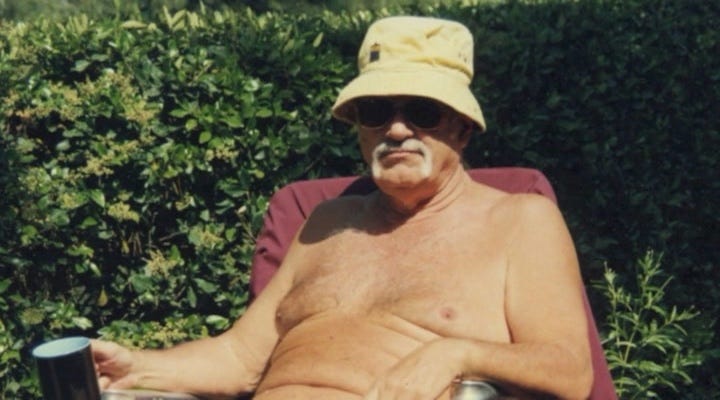
Cinder’s work was rooted in the belief that nudity, truthfully embraced, had the power to unsettle, to liberate, and to reveal. He asked people not just to shed their clothing, but their fear. He was staunchly nonconformist. His impact lives on in the archives he preserved, the essays he wrote, the movements he helped spark, and the countless people he inspired to think differently about the body and its place in public life. He has undoubtedly been an inspiration to me.
Cinder’s legacy endures not just in memory but in the urgent questions he asked—about freedom, fear, and what it means to live openly in one’s body. At a time when bodily autonomy, public space, and cultural expression remain contested terrain, his work continues to challenge and provoke. It reminds us that nudity was never the point—liberation was. 🪐
More reading
References
Cinder, C. (1976). What is this free beach movement? A self-interview with Cec Cinder. Green Mountain Quarterly, 4.
Cinder, C. (1998). The nudist idea. The Ultraviolet Press.
Cinder, C. (2013). Interview with Cec Cinder. Free Beach News, 157, 3–6.
Mussell, G. (2013). The pioneers: Biographies of nudist leaders who made a difference—Cec Cinder. American Association for Nude Recreation – Western Region. https://aanrwest.org/media/attachments/2022/08/17/cec-cinder.pdf
Naturist Education Foundation. (2023). Preserving naturist history through NEF grant. Pages of History, January 2023.
Western Nudist Research Library. (2022). AINS collection transfer records.
Cinder, C. (2013, May 22). [Unpublished oral history interview, “604 CEC Cinder PHD.mp4”]. American Nudist Research Library Archives.