

Waypoints: Lake Tahoe East Shore
Secret Cove, Chimney Beach & the coves along NV-28, east (Nevada) shore of Lake Tahoe · ~39.15° N, 119.93° W

You cannot easily ban a beach that the Forest Service has, for decades, let people use without their clothes. So when officials wanted the nude bathers gone from Lake Tahoe’s east shore, they went after the one tkhing the beaches couldn’t survive without: the parking. There is no lot. Just the gravel shoulder of a Nevada highway and a steep hike down to the water, and in 1996 a state road project proposed to pave the shoulder over and post it no-parking, which would have closed the coves to everyone by simply leaving nowhere to stop. What followed was a three-year fight run by one stubborn local naturist, a federal appeal he actually won, and a strange election-year footnote in which the Vice President’s staff reportedly wanted no photograph of Al Gore anywhere near a nude beach. Here’s the string of turquoise coves, and the campaign that kept them open.
The Place
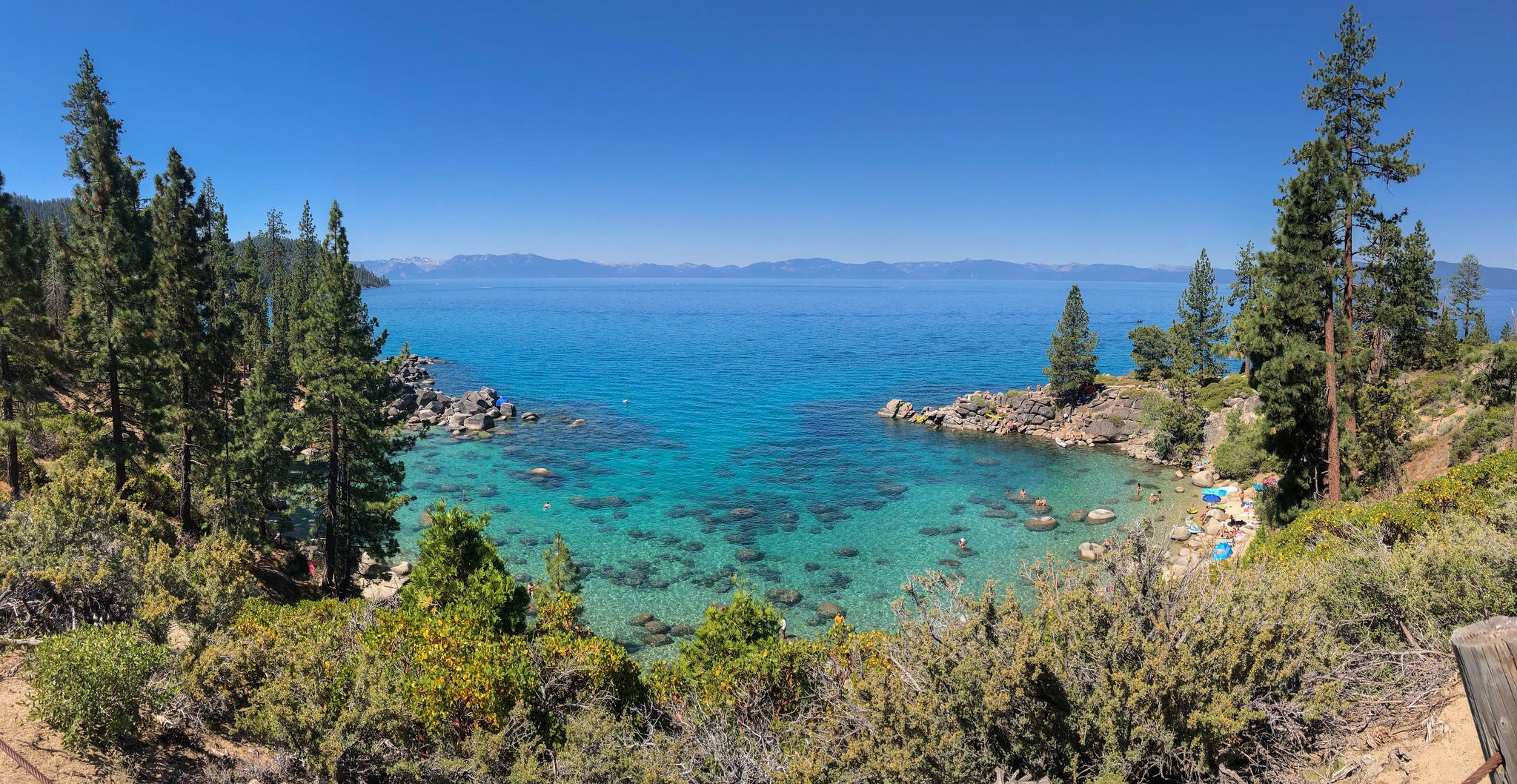
A string of small coves along the east (Nevada) shore of Lake Tahoe, tucked below State Route 28 on U.S. Forest Service land, south of Sand Harbor and near the landmark of Chimney Beach, named for the lone stone chimney of a long-gone cabin. From north to south the pocket beaches run Chimney Beach, Secret Cove, Boaters Beach, Secret Harbor Creek Beach, and Whale Beach—the cluster that, in modern usage, most people simply call Secret Cove (also known as Paradise Cove). It is a postcard setting: rounded granite boulders, pine, and the impossibly clear aquamarine water that the east shore is famous for, ringed by the peaks of the Carson Range.
And it is hard to reach, which is much of its protection. There is no dedicated parking. You leave the car on the gravel shoulder of Highway 28 and pick your way down a steep, rocky trail of a half-mile or so to the water. That single vulnerability, the shoulder parking, is the hinge on which the whole history of these beaches turns. Control the parking and you control the beach; everyone who ever wanted the nude use gone understood that, and so did the naturists who fought to keep it.
The Story
Nude use of the east-shore coves is old. Naturists have favored this stretch for more than seventy-five years, back to the mid-century Reno and Las Vegas naturist networks. The modern public-land tradition dates to the early 1970s, when the Forest Service bought more than ten thousand acres along the shore and the coves passed into the public domain. In the early 1980s the regulars organized as Tahoe Area Naturists, a group born, by its own telling, on the day someone looked around and realized nearly everyone on the beach was wearing a hat and nothing else. That was the origin of its annual “Hat Day,” still held the third Sunday of August, alongside a June cleanup and a July beach party. TAN worked with the Forest Service to keep the beaches maintained, and by the 1990s the coves were long-established and, unusually, posted by the Forest Service itself for clothing-optional use. Agencies and naturists, the later record notes, had “worked cooperatively for several decades,” with USFS signage placed “many years ago.” These were among the rare American beaches whose signage acknowledged the nude bathers rather than chasing them off.
Then came 1996, and two threats at once.