

We the people
On 250 years of American independence, and the long pursuit of life, liberty and the freedom to be nude

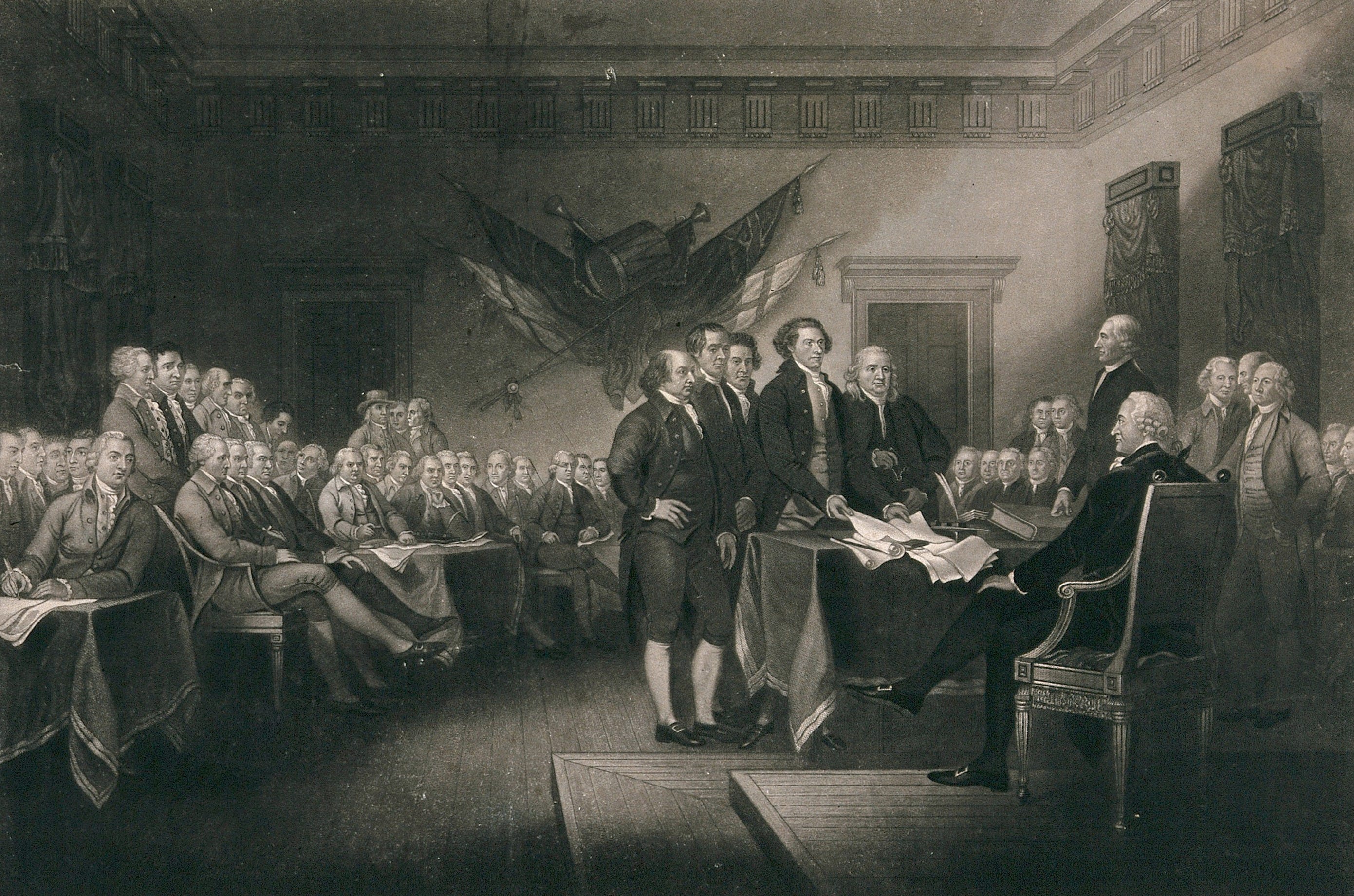
“We the People” has gotten a great deal of airtime on this 250th Anniversary of the USA, albeit a bit undeserved. While appropriate for the No King rallies these words are not part of our 250th birthday celebrations. Those three words are the start of our Constitution and were not written until 1787. In 1776, on July 2nd or 4th, depending on how you want to start counting, the Declaration of Independence was written, agreed to, publicly announced, and during the celebration cracked the Liberty Bell.
The second paragraph of that document that we are celebrating this year contains the following:
We hold these truths to be self-evident, that all men are created equal, that they are endowed by their Creator with certain unalienable Rights, that among these are Life, Liberty and the pursuit of Happiness.—That to secure these rights, Governments are instituted among Men, deriving their just powers from the consent of the governed,—That whenever any Form of Government becomes destructive of these ends, it is the Right of the People to alter or to abolish it, and to institute new Government, laying its foundation on such principles and organizing its powers in such form, as to them shall seem most likely to effect their Safety and Happiness.
With these words the 1776 Declaration of Independence set the stage for global change. The concept was that the people could govern themselves and do so because they were all equal. The premise was a catalyst for equality, in many ways.
In 1820, Thomas Jefferson, the author of the Declaration of Independence, compiled The Life and Morals of Jesus of Nazareth; also known as The Jefferson Bible. He cut and pasted, literally Greek, Latin, and English versions of the Bible to create a book about the man Jesus and his teachings. He removed the mystical and focused on the moral lessons. He saw Jesus as a person who was speaking to his brothers and sisters. Bottom line, it is about the acceptance of others and the directive to love one another. There are no mentions of separation of groups or inequality between the sexes. It is about compassion and caring.
This fits nicely with Nicolas Notovitch’s 1894 book The Unknown Life of Jesus Christ about the “unaccounted years” between the ages of 12 and 30 when Jesus was wondering and wandering throughout India and Tibet. There he was known as Issa, and ancient scrolls record that he preached that the human body was the temple of God and the place of love and acceptance.
Chapter IX, 11-14—Issa told them that God cared not for temples erected by human hand, but that human hearts were the true temples of God.
“Enter into your temple, into your heart; illuminate it with good thoughts, with patience and the unshakable faith which you owe to your Father.
“And your sacred vessels! they are your hands and eyes. Look to do that which is agreeable to God, for in doing good to your fellow men, you perform a ceremony that embellishes the temple wherein abideth Him who has created you.
“For God has created you in His own image, innocent, with pure souls, and hearts full of kindness and not made for the planning of evil, but to be sanctuaries of love and justice.”
The Declaration of Independence called for the opportunity to enjoy “Life, Liberty, and the pursuit of Happiness.” Government should work to provide those opportunities to all people in a way “to effect their Safety and Happiness.”
In the early 1800s, abolitionists cited these words to work toward the end of slavery. It took a civil war and a half-century, but that equality was gained through the Emancipation Proclamation, which was signed on 1 January 1863. Many of those abolitionists were women who they themselves realized were not equals to men.
The suffragettes formed to provide equal voting rights in 1848 in the USA. Over decades of women taking on expanding roles in business and support of the war efforts in the 1860s and 19teens, they finally won the right to vote with the 19th Amendment to the Constitution in 1920. That is just over a century ago.
In parallel, the Sanitation Reform of the mid-1800s addressed sewage disposal, clean water, food safety, and air quality. It was known that the body was closely related to the environment. The Industrial Revolution grew urban centers that lacked the services for densely populated communities. Company towns sprang up as an alternative to expanding services in existing urban areas and often were associated with flowing rivers to power the machinery. However, the living conditions were minimal for families with long work hours.
One aspect of the inequity was the required clothing that kept women hobbled. The long dresses and sleeves led to injuries and deaths in early mechanized shops. The Dress Reform movement started in the mid-1800s with the female-designed short dress with pantaloons dubbed bloomers. Lopez’s 2022 dissertation targets how the unlacing of the corset and removal of heavy burdensome clothing fostered the women’s rights movement.
Lopez writes in “Corsets and Civilization Chapter 4” that to dress in a corset was seen to be civilized. This was even if you were indigenous or a minority. That clothing use caught some reformers off guard. Was it really just when a minority dressed well, that they “inherited” the trappings of civilization? However, in the section “Subverting the Stereotype” Lopez flips the entire argument on its head; corsets were signs of savagery. She states that the wearing corsets was just as harmful as Chinese foot binding, or the placement African neck rings.
She also offers three examples from US history when women dressed like a man in pants. Generally such an act could get you arrested, but civil war solders, frontier’s women doing men’s work, and medical doctors showed how slacks were practical for a profession. These women were not trying to be men, but they wanted the freedom to dress for the activity in which they participated. World War One ended the corset due to demand for steel, cotton, and rubber rationing. She makes the point that in reality, it was the wearing of pants that was the real revolution, as corsets were on their way out due to health concerns.
Class was also becoming an important aspect of life at the end of the 19th century. The haves and the have-nots were separating as economic structures were making the rich richer and the poor even more in debt. Attitudes could change in a flash based solely on the cut of one’s trousers or style of hat. John Russell Coryell, a pioneering nudist writer, among others in the 1890s produced a series of books that regularly targeted how one dressed could determine how successful the person could be and that the focus needed to shift to looking at one’s behavior and character as the significant factors for success.
Equality, dress, health, safety, urbanization all came together in the late 19th century. It became apparent that a way to counter urban factories and class dress codes, was to get into nature for the full exposure of the entire body to air, sun, clean water with good food and healthful exercise. Social nakedness bloomed and began to blossom primarily along the Hudson River Valley not far from New York City in the late 1890s.
In 1905, Bernarr Macfadden, publisher of Physical Culture magazine and numerous books on health and well-being, purchased property in New Jersey. He had an entire community mapped out. Physical Culture City was to promote eating a vegetarian diet with plenty of opportunities for exercise. There were no shops that would sell meat, tobacco, or alcohol products and medical doctors were not allowed. Clothing was optional and many participants sun-bathed and swam nude in the enclosed lake. It was to be a company town with the publishing house being located along a train track spur to bring paper and ink to the community and send off magazines and books promoting physical culture. While it was an energized concept, it did not succeed as the residents who wanted the proposed healthy way of life did not want to work for Macfadden Publications.
By 1919, William Calhoun Walker, who honeymooned at Physical Culture City, formed the Common Sense Club and reported having over 1,000 nudist members residing in all 48 states with others internationally. In 1931, books hit the streets about accounts from England, France, and Germany and the growth of social nudity with all its health benefits. After World War II, the returning GIs who had gained experiences with social nudity in Europe and the South Pacific wanted to continue to enjoy these fought-for freedoms and continue their efforts toward “Life, Liberty, and the pursuit of Happiness.”
Surveys and studies of those who were participating in social nudity (the nudists), from the 1930s, 1950s, and 1970s showed that among the professions, professors, nurses, emergency personnel and veterans were most common. These are people who were often required to wear uniforms, including suits and ties. To express themselves and remove those class or job trappings, they could go nude.
These same reports mention the equality of the sexes and in Europe that females outnumbered the males in the early days. Once the hobbling clothes were removed, women found they could be as active as men in not only recreation but in the activities of building the new clubs. Women took on leadership roles in the clubs and national organizations in the 1950s. There were family energy and female empowerment in the “Life, Liberty, and the pursuit of Happiness” within the nudist community in the mid-20th century.
Come the 1970s, again the free spirits of the USA wanted to explore and become one with nature. The mind-expanding, ecology-focused, creative expressions of that period were clearly going after the fullness of “Life, Liberty, and the pursuit of Happiness.” From these activities, the Naturists organized. They searched for the natural hot springs, riverbanks, lake shores, beaches, and wilderness trails that while on public lands, could be enjoyed clothes-free. The decision that simple nudity on Federal lands was not illegal opened millions of acres to naturists for recreation. It was also a renewed time for women with the efforts to codify the Equal Rights Amendment.
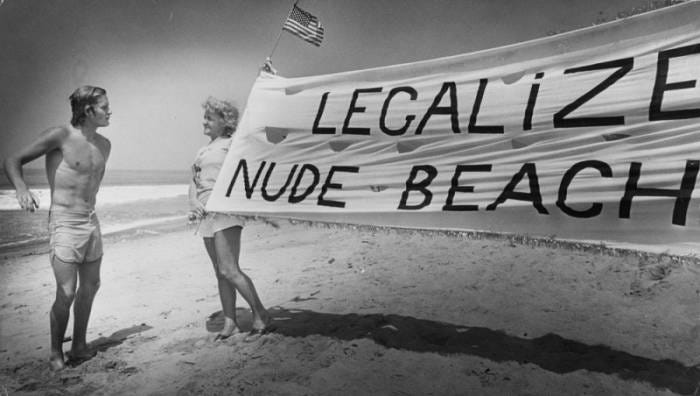
For 250 years, the USA has actively celebrated our founding and the documents that set in motion our independence. It has taken centuries now to write the laws and have the votes for representation that separate any specific religious practice from behaviors that foster “Life, Liberty and the pursuit of Happiness.” Jefferson knew this and his assessment of Jesus as a man of moral behavior was his model. Jesus, who is quoted in the Gospel of St. Thomas saying #37, which was culled from the Bible accounts:
Unless you know not shame, until you are naked without knowing shame, unless you are two in one body, you will not know the Kingdom of Heaven.
Or in an older translation:
When you unclothe yourselves and are not ashamed, and take your garments and lay them beneath your feet like the little children (and) trample on them, then [you will see] the Son of the Living One, and you will not be afraid.
This is a specific charge to those who follow the moral teachings of Christianity. One should not be ashamed of one’s body. The mind and the body of the individual are different. Being at one with mind and body is the way. There is no shame involved when that state of mind is achieved.
Alois Knapp, a nudist pioneer of the 1930s said: “Nudism is the greatest social revolution in two thousand years.” His point of reference was not the establishment of a democratic republic of now 250 years age, or of a government of the people which goes back to Iceland’s parliament of a thousand years ago. He was referring to the shift in religion and the beginning of Christianity. The equality of nudism is foundational and has been observed for over a century.
For now, half of the 250 years that citizens have been celebrating our independence, there have been Americans enjoying social nudity. For 125 years, there are records of naturists enjoying social activities without the need for clothing. Half of American history has had social nudity. Going forward, that percentage will now increase. It is remarkable that there is no academic body in the USA that will house a collection of that history. The human body continues to be an anathema for our legal system, and educational institutions are loath to offer instruction on the benefits that have been documented of family social nakedness.
While we celebrate our 250th year of independence, those who engage in social nakedness are hobbled by laws and community behaviors toward “Life, Liberty, and the pursuit of Happiness.” To reiterate a line from the Declaration of Independence:
That whenever any Form of Government becomes destructive of these ends, it is the Right of the People to alter or to abolish it, and to institute new Government, laying its foundation on such principles and organizing its powers in such form, as to them shall seem most likely to effect their Safety and Happiness.
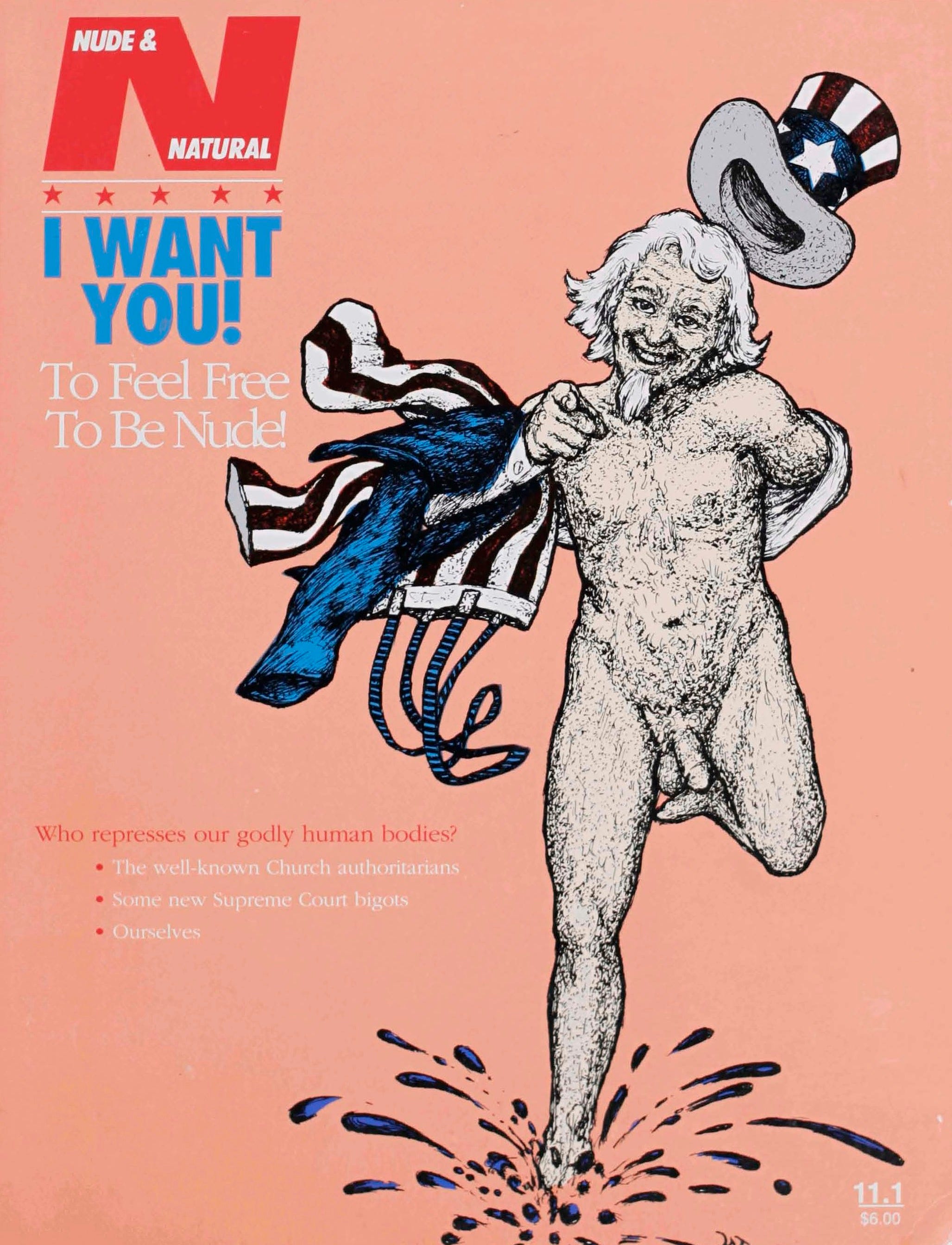
As The Naturist Society’s magazine Nude and Natural proclaimed in 1991, with Uncle Sam shedding his clothes “I WANT YOU! To Feel Free To Be Nude!” 🪐